
Stocks and shares ISA vs cash ISA: Which is right for you in 2025?
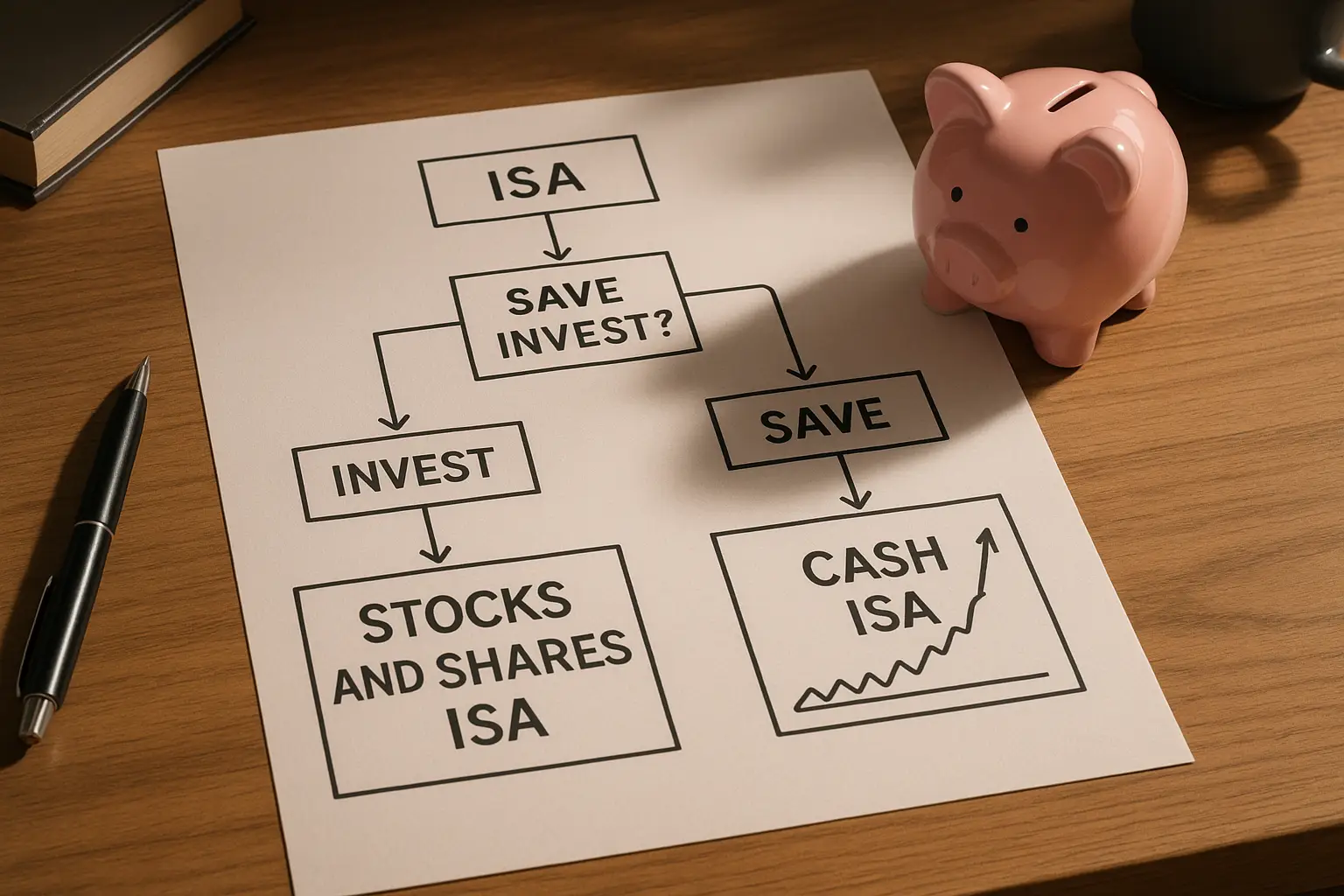
When deciding between a stocks and shares ISA vs cash ISA, the core choice boils down to your risk tolerance and financial goals. A cash ISA offers safety and predictable interest, ideal for short-term needs, while a stocks and shares ISA provides higher potential growth through investments but comes with market volatility. In 2025, with proposed policy changes like a potential cut to cash ISA allowances, understanding stocks and shares ISA vs cash ISA helps UK savers maximise tax-free returns amid economic uncertainty.
Both types allow up to £20,000 in tax-free savings annually for 2025/26, as per HMRC rules. Over 11 million cash ISAs are held compared to four million stocks and shares ISAs, with average balances of £15,000 versus £25,000, highlighting the growth appeal of investments (Moneyfarm, 2025). This guide compares cash ISA vs stocks and shares ISA to help you choose wisely, like a smart shopper spotting the best deal.
Understanding cash ISAs
Cash ISAs are essentially tax-free savings accounts where your money earns interest without HMRC taking a cut. They function like a regular savings account but shield interest from income tax. In 2025, average rates hover around 4.5-5% AER (annual equivalent rate, a standard measure of interest), making them a low-risk option for preserving capital.
Current rates and providers
Top providers offer easy-access cash ISAs at 4.8% or fixed-rate options up to 5.2% for one year. For the latest rates, check Moneyfacts’ weekly roundup. These rates beat standard savings amid base rate stability, but inflation could erode real returns.
Pros and cons for savers
- Pros: Capital is protected (FSCS covers up to £85,000 per provider), instant access variants available, no market fluctuations.
- Cons: Lower long-term growth than investments; rates may drop if interest rates fall.
A quick tip: If you’re parking emergency funds, a cash ISA beats taxable savings, saving you up to 40% in tax on interest over £1,000 for basic-rate taxpayers.
Understanding stocks and shares ISAs
Stocks and shares ISAs let you invest in funds, shares, or bonds tax-free, aiming for higher returns over time. Unlike cash ISAs, your money buys assets like FTSE 100 index funds, exposing it to stock market ups and downs. They’re suited for medium to long-term horizons of five years or more.
Investment options and expected returns
Choose from global funds, UK shares, or ETFs via platforms. Historical data shows 7-10% average annual returns, outpacing cash’s 4.5-5%, though past performance isn’t guaranteed (Be Clever With Your Cash, 2025). In 2025, focus on diversified portfolios to mitigate volatility.
Fees and platform choices
Platform fees range from 0.25-0.45%, plus fund charges around 0.5%. For the best stocks and shares ISA options, low-cost providers like Vanguard shine. Always factor in these costs, as they can eat into returns.
Life hack: Start small with a stocks and shares ISA by investing just £100 monthly—pound-cost averaging smooths out market dips, turning volatility into an ally for smarter growth.
Key differences: Cash vs stocks and shares
The main divide in stocks and shares ISA vs cash ISA is risk versus reward: cash guarantees your principal but caps growth, while stocks offer upside potential with possible losses. Both provide tax relief on gains and income, sharing the £20,000 allowance, but you can’t exceed it across all ISAs.
Risk and reward comparison
| Feature | Cash ISA | Stocks and Shares ISA |
|---|---|---|
| Risk Level | Low (FSCS protected) | High (market-dependent) |
| Average 2025 Returns | 4.5-5% AER | 7-10% long-term (variable) |
| Minimum Investment | £1-£100 | £50-£1,000 |
| Fees | Minimal | 0.25-0.75% annually |
| Access | Flexible or fixed | Anytime, but growth-focused |
This table, based on 2025 data from Moneyfacts and FCA stats, shows cash ISA vs stocks and shares ISA trade-offs clearly. For short-term needs, cash wins; for retirement, stocks excel.
Suitability by goals and timeline
If saving for a house deposit in two years, opt for cash ISA safety. For goals 10+ years away, stocks and shares ISA’s compounding can build wealth faster. A balanced view from Unbiased recommends assessing your timeline first.
Tip: You can have both a cash ISA and stocks and shares ISA in one tax year, splitting your allowance for diversified tax-free saving.
Lifetime ISA: Cash vs stocks variants
Lifetime ISAs (LISAs) cater to 18-39-year-olds saving for a first home or retirement, with a 25% government bonus up to £1,000 on £4,000 contributions. Cash LISA vs stocks and shares lifetime ISA mirrors the standard debate: safety with 4-5% interest versus investment growth at 7-10%, both tax-free.
Bonus structure and best uses
The bonus applies regardless of type, but stocks variants suit long-term goals like buying a £450,000 home, where growth amplifies the perk. Non-qualifying withdrawals incur a 25% penalty. For home buying, cash LISA provides stability; for retirement, stocks and shares LISA maximises returns (Rest Less, 2025).
Junior ISA options for children
Junior ISAs (JISAs) help parents save £9,000 tax-free annually for kids under 18, with access at age 18. Junior stocks and shares ISA vs cash ISA: the former offers 4-6% higher annual growth over 18 years, turning £9,000 yearly into far more via compounding.
Limits and long-term growth potential
Cash JISAs yield steady interest, ideal if you prioritise capital protection. Stocks variants, per Moneyfacts 2025, outperform for education or starter funds. Parents often choose stocks for inflation-beating growth, but blend both for balance.
2025 updates and policy changes
For 2025, the ISA allowance stays £20,000, but proposed reforms by Chancellor Rachel Reeves could halve cash ISA limits to £10,000 from April, pushing £16bn into UK equities annually (City A.M., 2025). This stocks and shares ISA vs cash ISA shift favours investors amid 4.5% base rates.
Interest rate outlook and platforms
Cash rates may stabilise at 4-5%, while stocks face FTSE volatility. Explore neutral platforms for the best stocks and shares ISA deals. Stay updated via HMRC’s ISA rules.
Which ISA is right for you?
Choose based on risk: low for cash, higher for stocks and shares. If under 40 with home goals, consider LISA variants. To open, follow our guide on how to open a stocks and shares ISA.
Decision factors and combining ISAs
- Assess risk tolerance: Conservative? Cash ISA.
- Timeline: Short-term safety, long-term growth.
- Goals: Emergency fund (cash), wealth-building (stocks).
Combine both for a hybrid approach. Remember, this isn’t personal advice—consult a financial advisor for your situation.
Frequently asked questions
What’s the difference between a cash ISA and a stocks and shares ISA?
A cash ISA is a tax-free savings account earning fixed interest, protected against loss but with modest returns around 4.5-5% in 2025. In contrast, a stocks and shares ISA invests in markets for potential 7-10% growth, but values can fall, introducing risk. The key distinction lies in cash ISA vs stocks and shares ISA: security versus opportunity, both under the £20,000 allowance for diversified UK saving strategies.
Which is better: cash ISA or stocks and shares ISA?
Neither is universally better; it depends on your needs. Cash ISAs suit risk-averse savers needing quick access, preserving capital amid 2025’s stable rates. Stocks and shares ISAs excel for long-term growth, historically outperforming inflation, though volatility requires a five-year horizon. For most in their 30s-50s, blending both maximises tax-free benefits without overexposure.
For expert strategies, consider market forecasts showing FTSE recovery boosting stocks and shares ISA returns.
Can I have both a cash ISA and a stocks and shares ISA?
Yes, you can hold multiple ISAs, including both cash and stocks and shares types, as long as total contributions don’t exceed £20,000 per tax year. This allows splitting your allowance, say £10,000 in cash for safety and £10,000 in stocks for growth. HMRC rules permit this flexibility, helping avoid common mistakes like maxing one type prematurely.
How do Lifetime ISAs compare in cash vs stocks and shares?
Lifetime ISAs offer a 25% bonus on up to £4,000 yearly for home or retirement, with cash versions providing steady interest and stocks and shares adding investment upside. Cash lifetime ISA vs stocks and shares lifetime ISA: the former avoids market risk for first-time buyers, while the latter suits retirement with higher potential. Penalties apply for early withdrawals, so align with 18-39 age eligibility and long-term plans.
What are the risks of a stocks and shares ISA vs cash ISA?
Stocks and shares ISAs risk capital loss from market dips, unlike cash ISAs’ FSCS protection up to £85,000. Volatility can mean short-term drops of 20% or more, but long-term recovery often yields 7-10% returns. For beginners, start diversified; experts mitigate via funds, contrasting cash’s predictability in uncertain 2025 economies.
Cash ISA vs stocks and shares ISA 2025: Any changes?
In 2025, allowances remain £20,000, but proposed cuts to cash ISA limits to £10,000 aim to boost equity investments by £16bn. Rates for cash stay 4.5-5%, while stocks face policy-driven opportunities. This evolution in cash ISA vs stocks and shares ISA encourages balanced portfolios; check HMRC for updates to avoid missing tax perks.
Junior cash ISA vs junior stocks and shares ISA: What’s best for kids?
With £9,000 annual limits, junior cash ISAs offer safe growth at current rates, ideal for conservative parents. Junior stocks and shares ISAs provide 4-6% historical edge over 18 years, compounding for bigger nest eggs at age 18. Choose based on family risk appetite, blending for optimal child savings without inheritance tax worries.