
Understanding UK savings rates in 2025
The Bank of England base rate stands at 4% as of October 2025, influencing the interest rate on savings accounts across the UK. This rate, down from 4.25% in May 2025, sets the benchmark for what banks offer savers, as detailed in MoneySuperMarket’s analysis. To earn more, focus on accounts that track close to this base rate while considering your access needs.
Base rate overview and recent changes
The bank of england interest rate, often called the base rate, determines borrowing costs and indirectly boosts savings returns. In 2025, the BoE cut the rate to combat slowing inflation, making it easier for banks to offer competitive savings deals. Recent decisions, like the August cut, have stabilised at 4%, but watch for the next BoE interest rate decision on 7 November 2025, which could signal further adjustments.
Real returns matter more than headline figures. With UK inflation forecast at 3.9% for 2025, a 4% interest rate on savings yields only about 1.1% after inflation—better than negative returns last year but still eroding purchasing power over time.
How inflation affects real returns
Inflation reduces the buying power of your money, so compare your savings interest rate against the current inflation rate. For instance, if your account pays 4.55% but inflation hits 3.9%, your real gain is 0.65%. Use this insight to avoid low-rate traps; aim for accounts beating inflation to protect your nest egg.
Types of savings accounts
Savings accounts come in easy-access, fixed-rate, and regular saver varieties, each suiting different habits. Easy-access lets you withdraw anytime with rates around 4-4.5%, ideal for emergencies. Fixed-rate locks in for 1-5 years at 4-4.5%, suiting long-term savers, while regular savers reward monthly deposits up to £500 with 6-7.5% rates but penalise withdrawals. For tax-free options, consider linking to our guide on savings accounts.
Top savings account rates right now
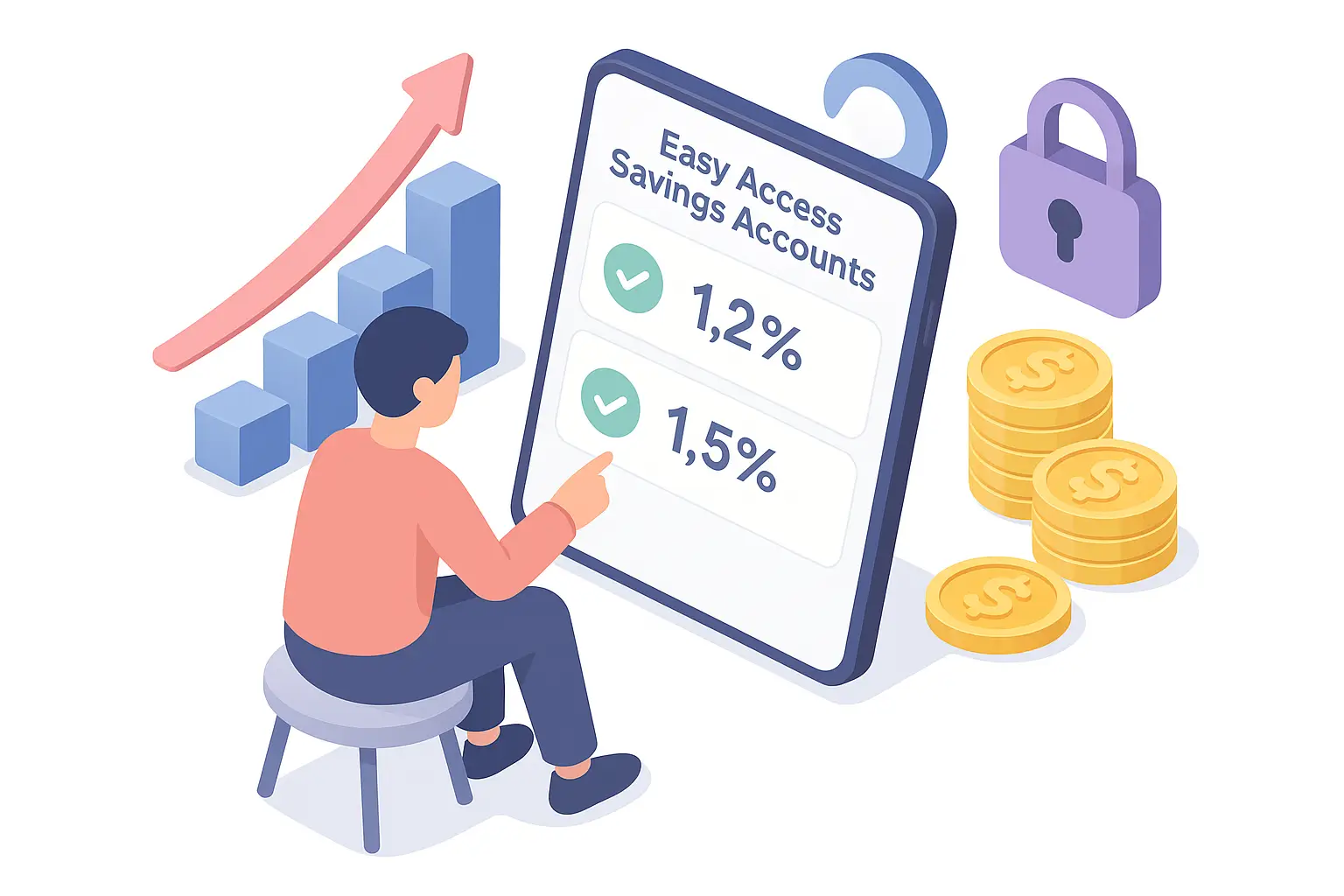
As of October 2025, the highest easy-access savings account rates reach 4.55% AER (annual equivalent rate, which shows yearly earnings including compounding). This beats the UK average of 2.5%, helping you earn hundreds more on £10,000 annually. Compare providers via Money.co.uk for the latest.
Easy-access accounts up to 4.55%
These flexible accounts offer the best interest rate for everyday use without lock-ins. Top picks include Chase at 4.1% (no minimum deposit) and Cynergy Bank at 4.55% (FSCS-protected up to £85,000). Switch if your current rate lags; for example, moving £20,000 could add £100 yearly.
Fixed-rate options
Fixed savings lock your money for security against falling rates, with 1-year deals at 4.3-4.5%. Providers like Shawbrook Bank offer 4.55% on 12 months, per Moneyfacts data. Choose if you can commit funds, as early withdrawal fees apply.
Regular savers at 7.5%+
For disciplined savers, regular accounts from First Direct or NatWest pay up to 7.5% on £200-£500 monthly deposits over 12 months, as per MoneySavingExpert. Eligibility often requires a current account with the bank, capping total at £3,000-£6,000. This hack maximises returns but limits access.
| Provider | Type | AER (%) | Min Deposit | Access |
|---|---|---|---|---|
| Chip | Easy-access | 4.32 | £1 | Instant |
| Shawbrook Bank | Fixed 1-year | 4.55 | £1,000 | Notice |
| First Direct | Regular saver | 7.00 | £25/month | Limited |
| Cynergy Bank | Easy-access | 4.55 | £1 | Instant |
Note: Rates from Moneyfacts (accessed October 2025); verify current offers as they fluctuate. FSCS protects up to £85,000 per provider.
Quick tip to boost earnings
Check your bank’s app monthly for rate drops—switch to a top easy-access account in under 10 minutes online. Use comparison sites to avoid missing the best interest rate savings account deals.
2025 interest rate forecasts for savers
Markets predict the BoE base rate falling to 3.75-3.5% by December 2025, per analyst insights, pressuring savings rates downward. This uk interest rate forecast suggests acting now to lock in higher yields before cuts erode gains. Focus on fixed or regular savers to hedge.
BoE predictions
The next bank of england interest rate decision in November could cut to 3.75% if inflation eases, following patterns from 2024. BoE reports indicate two more cuts possible in 2025, aligning with interest rate predictions uk for gradual easing. Track via the official site for updates.
Impact on savings products
Lower base rates mean easy-access yields may dip to 3.5-4%, while fixed deals hold steady for now. Regular savers could stay attractive at 6%+, but inflation at 3.9% narrows real returns. For broader effects, see how base rates impact best savings account options.
Tips for rate changes
Ladder your savings: split across easy-access and fixed terms to balance access and returns. Monitor boe interest rate announcements quarterly. If rates fall, refinance before year-end to capture peaks— a simple hack to add £50-£200 to earnings on modest pots.
How to calculate and choose the best rate
Use an interest rate calculator to project earnings: for £10,000 at 4.55% AER, expect £455 yearly. Factor in compounding and taxes for accuracy; online tools from Which? simplify this. Prioritise FSCS protection and eligibility to avoid pitfalls.
Using calculators
An interest rate calculator uk tool estimates growth; input principal, rate, and term for precise forecasts. For example, £5,000 at 7% over 12 months yields £350, but adjust for monthly deposits in regular savers. Free versions on MoneySavingExpert help compare scenarios without commitment.
Tax considerations
Basic-rate taxpayers enjoy £1,000 personal savings allowance tax-free, per HMRC rules. Higher earners get £500; exceed this and pay 20-45% on interest. ISAs offer unlimited tax-free growth—consider for larger sums to maximise net returns.
Provider eligibility
Many top rates require UK residency and a linked current account, like for regular savers. Check minimum deposits (£1-£1,000) and age limits (18+). Compare via MoneySavingExpert’s guide to match your profile.
Frequently asked questions
What is the best savings account interest rate right now?
The top easy-access rates hit 4.55% AER in October 2025, offered by providers like Cynergy Bank, while regular savers reach 7.5% for monthly deposits. These outperform the 2.5% UK average, potentially earning £455 on £10,000 yearly. Always verify eligibility and protection before switching, as rates vary by provider and can change quickly.
How do interest rates affect my savings?
Higher interest rates increase earnings on your balance through compounding, turning idle cash into growth. However, if rates lag inflation (3.9% in 2025), real value erodes; aim for 4%+ to stay ahead. For beginners, track the bank of england interest rate as it sets the tone for all UK savings products.
When is the next Bank of England interest rate decision?
The BoE’s next interest rate decision is scheduled for 7 November 2025, with potential cuts to 3.75% based on inflation data. These announcements directly influence savings yields, often within weeks. Savvy shoppers monitor them via the BoE website to time account switches for maximum returns.
What are the predicted interest rates for 2025?
UK interest rate forecasts point to the base rate dropping to 3.5-3.75% by year-end, per market analysts, amid easing inflation. This could pull average savings rates to 3-4%, pressuring easy-access accounts most. Experts advise locking in fixed rates now to secure higher yields against interest rate predictions 2025.
How to calculate interest on savings?
Use the formula: Interest = Principal × Rate × Time, but opt for an interest rate calculator for AER compounding accuracy. For £10,000 at 4.55% over one year, it’s about £455 gross. Advanced users factor taxes and inflation; tools like those on Money.co.uk provide projections, helping compare the highest interest rate savings account options strategically.
Will savings rates fall further in 2025?
Yes, with BoE cuts expected, savings rates may decline to 3-3.5% by late 2025, especially for variable accounts. Fixed deals will hold better, offering stability for risk-averse savers. To counter this, diversify into ISAs or regulars early; this advanced strategy minimises losses from uk interest rate forecast downturns while preserving liquidity.
This article is for informational purposes only and not financial advice. Rates change frequently; consult a professional for personal situations. Updated October 2025.