
Understanding online savings rates in the UK
In 2025, the best online savings rates hover around 4.5% AER, offering savers a solid return compared to traditional high street banks, which often lag at 1-2%. Digital banks and credit unions lead the pack by passing on lower overheads directly to customers. This section breaks down what drives these rates and key concepts to know before choosing an account.
What influences savings rates
The Bank of England base rate is the primary driver of online savings rates, with recent 2025 cuts potentially lowering AERs to 4% by year-end, according to Bank of England base rate decisions. Competition among providers pushes rates higher, while economic factors like inflation also play a role. For instance, easy access accounts fluctuate more than fixed-rate bonds.
AER vs APY explained
AER, or Annual Equivalent Rate, is the UK standard for comparing savings interest, showing the effective yearly return including compounding, unlike the US-focused APY which serves a similar purpose but isn’t commonly used here. Always check AER to ensure apples-to-apples comparisons in online savings rates. For example, a 4% AER might compound daily for better growth than a simple 4% rate.
FSCS protection for online accounts
Online savings accounts are protected up to £85,000 per person per institution by the Financial Services Compensation Scheme (FSCS), the UK’s deposit safety net. This covers digital banks and eligible credit unions, providing peace of mind against bank failures. Verify FSCS eligibility on the provider’s site or via FSCS protection for savings.
Top digital banks for high-yield savings 2025
Digital banks like Marcus by Goldman Sachs and Chase UK dominate the best online savings rates in 2025, offering up to 4.75% AER on easy access accounts with no fees or minimums. These platforms excel in user-friendly apps and competitive yields, appealing to tech-savvy savers. Here’s a look at standout options.
Best easy access rates
Easy access accounts from digital banks provide flexibility with top rates around 4.5% AER. Marcus leads with 4.75%, no withdrawal limits, and instant transfers. Chase UK follows at 4.1%, ideal for everyday savers building emergency funds.
Fixed-rate options
For locked-in returns, fixed-rate bonds from digital banks offer 4.2-4.5% AER over one year. Atom Bank provides 4.4% with a £500 minimum, beating variable rates amid 2025 base rate uncertainty. These suit savers not needing quick access.
Promotional offers
Many digital banks run bonuses, like an extra 0.5% AER for six months, boosting effective online savings account rates to 5%. Check terms to avoid rate drops post-promo. For youth accounts, providers like HSBC offer online child savings account rates up to 3.5%, helping families start early.
Quick tip: Maximise your returns
- Switch to a digital bank for 4%+ AER without branches.
- Combine easy access with fixed for balanced liquidity.
- Monitor Bank of England announcements for rate shifts.
Best credit unions savings rates comparison
Credit unions, member-owned co-operatives in the UK, deliver competitive online savings rates around 4% AER, often matching digital banks while prioritising community benefits. Unlike profit-driven banks, they reinvest in members. Access requires joining, typically via a £5 share purchase.
Membership and eligibility
To join a UK credit union, you need a connection like living in the area or working in a sector—e.g., Policemen’s Credit Union accepts police affiliates. This model ensures rates stay high without aggressive marketing. Online applications make joining straightforward in 2025.
Competitive rates overview
Top credit unions like Nationwide (a building society equivalent) offer 4.36% AER on easy access, similar to US peers per Bankrate’s 2025 analysis, adapted for UK. Fixed options hit 4.2%, with low minimums starting at £1.
Pros vs digital banks
Credit unions shine in personalised service and ethical lending, but digital banks edge out on app convenience and broader access. Rates are neck-and-neck, though credit unions may cap withdrawals. For businesses, some provide online business savings accounts best rates at 3.5%.
Digital banks vs credit unions: Side-by-side comparison
When comparing online savings rates, digital banks average 4.3% AER versus 4.1% for credit unions in 2025, but the latter offer stability for members. Digital options win on speed, while credit unions build loyalty through dividends. Use this table for a quick overview.
Rate tables
| Provider | Type | AER (%) | Min Deposit | Withdrawal Terms |
|---|---|---|---|---|
| Marcus by Goldman Sachs | Digital Bank – Easy Access | 4.75 | £1 | Unlimited |
| Chase UK | Digital Bank – Easy Access | 4.10 | £0 | Unlimited |
| Atom Bank | Digital Bank – Fixed 1 Year | 4.40 | £500 | After term |
| Nationwide | Credit Union Equivalent – Easy Access | 4.36 | £1 | Unlimited |
| Policemen’s Credit Union | Credit Union – Fixed | 4.20 | £5 | After term |
| Metro Bank Credit Union | Credit Union – Easy Access | 3.80 | £1 | Limited to 5/month |
Rates as of late 2025; check providers for updates. Data inspired by Moneyfacts savings market report.
Fees and accessibility
Both have no monthly fees, but credit unions may require membership fees (£5-£10 annually). Digital banks offer 24/7 app access; credit unions vary, with some online platforms. For comparisons, see our guide to compare savings account rates.
2025 projections
With Bank of England cuts, expect online savings rates to dip to 3.5-4% by mid-2025. Digital banks may adjust faster, while credit unions hold steady for members. High-yield options could still outperform inflation.
How to choose the best online savings account
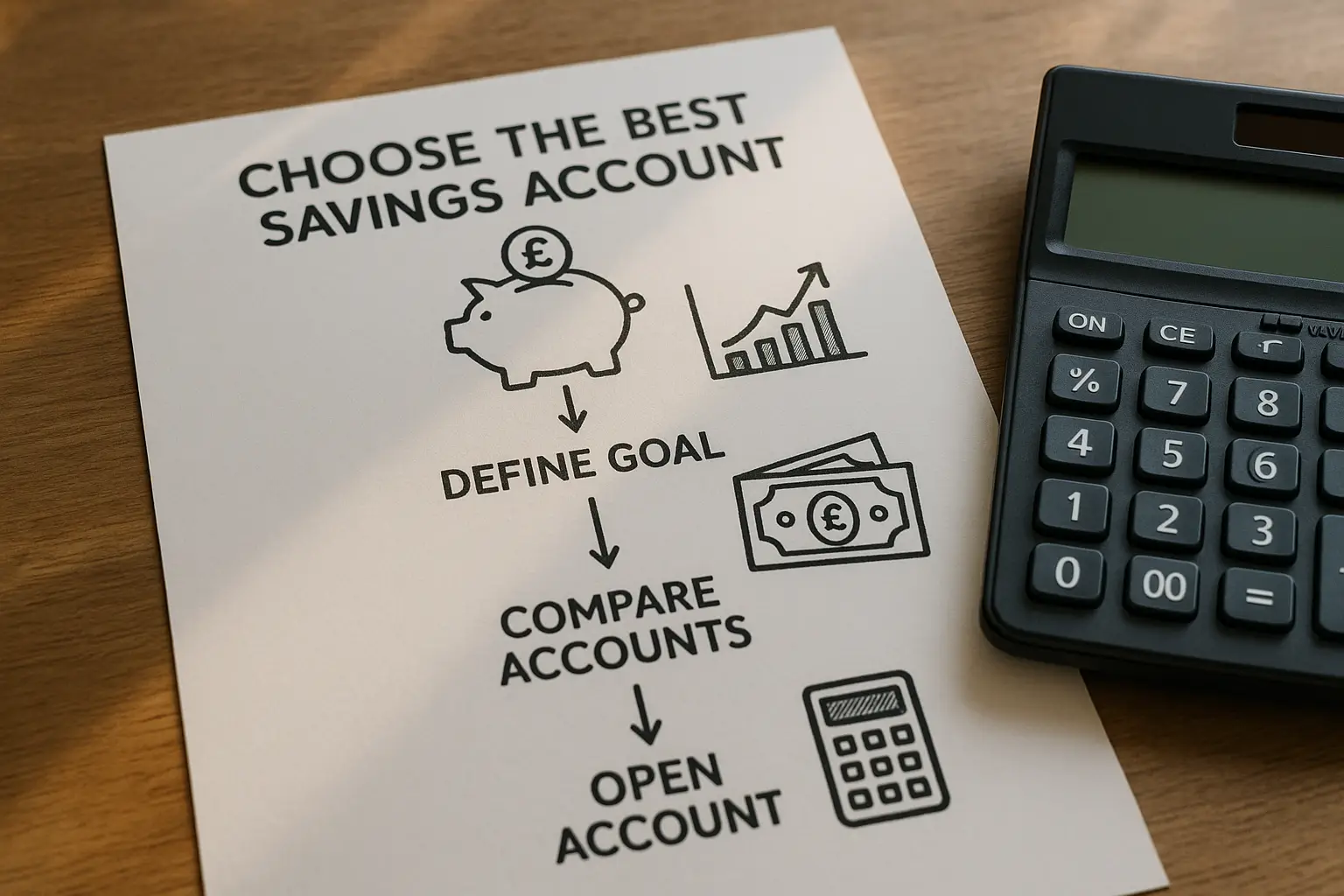
Prioritise AER above 4% and FSCS protection when selecting from the best online savings rates. Balance access needs with your timeline—easy access for flexibility, fixed for guarantees. Always factor in your tax situation.
Factors to consider
Assess minimum deposits (often £1 online), withdrawal penalties, and app usability. For highest online savings rates, digital banks suit non-members; credit unions for community ties. Explore high yield savings accounts for top picks.
Tax implications (ISA integration)
Interest counts as taxable income, but personal savings allowance covers £1,000 for basic-rate taxpayers. Pair with ISAs for tax-free growth—link to our best savings rates guide for more. Non-ISA accounts suit short-term parking.
Switching tips
Use the Current Account Switch Service for seamless transfers, often completing in 7 days. Compare via tools before moving to avoid gaps in earnings. Monitor for intro bonuses to boost initial online savings interest rates.
Frequently asked questions
What is the best online savings account rate right now?
As of late 2025, the highest easy access online savings rates reach 4.75% AER from digital banks like Marcus, far surpassing traditional banks at 2%. These rates reflect competitive markets but can change with Bank of England decisions. For the latest, consult comparison sites; always verify FSCS coverage to ensure safety.
How do online savings rates compare to traditional banks?
Online savings rates average 4.3% AER versus 1.5% at high street banks, thanks to lower costs without branches. Digital providers pass savings to customers, offering better yields for similar security. However, traditional banks may suit those preferring in-person service, though rates lag significantly in 2025.
Are online savings accounts safe in the UK?
Yes, most are protected by FSCS up to £85,000, covering failures like Silicon Valley Bank’s UK arm in 2023. Choose authorised providers via the FCA register for full safeguards. While hacking risks exist, two-factor authentication and encryption minimise them, making online accounts as secure as branches.
What are the highest easy access savings rates 2025?
Top easy access rates hit 4.5% AER from digital banks and credit unions, ideal for liquid funds. Providers like Chase UK and Nationwide lead, with no penalties for withdrawals. Expect slight drops post-BOE cuts, so lock in now; compare via our top savings accounts 2025 insights.
How to choose between digital banks and credit unions for savings?
Digital banks offer broader access and higher rates (4.5% AER) without membership, suiting quick switches. Credit unions provide 4.1% AER plus community perks but require eligibility, like local ties. Weigh app convenience against personalised support; for interest-focused savers, digital edges out unless you’re a member.
Are there good online child savings account rates?
Yes, online youth savings account rates reach 3.5% AER for under-18s, often via junior accounts from digital banks like HSBC. These build habits tax-free if linked to Junior ISAs, with parental controls. Compare providers for no-fee options; rates are lower than adult accounts but beat inflation for long-term growth.
What impacts online savings rates comparison in 2025?
Base rate changes, competition, and inflation drive variations, with digital banks reacting faster than credit unions. Fixed vs easy access differs—lock 4.4% now or stay flexible at 4.2%. Use tables for online savings account rates comparison; project 3.8% averages by year-end per economic forecasts.
Rates fluctuate; this is not financial advice. Consult a professional for personalised guidance.